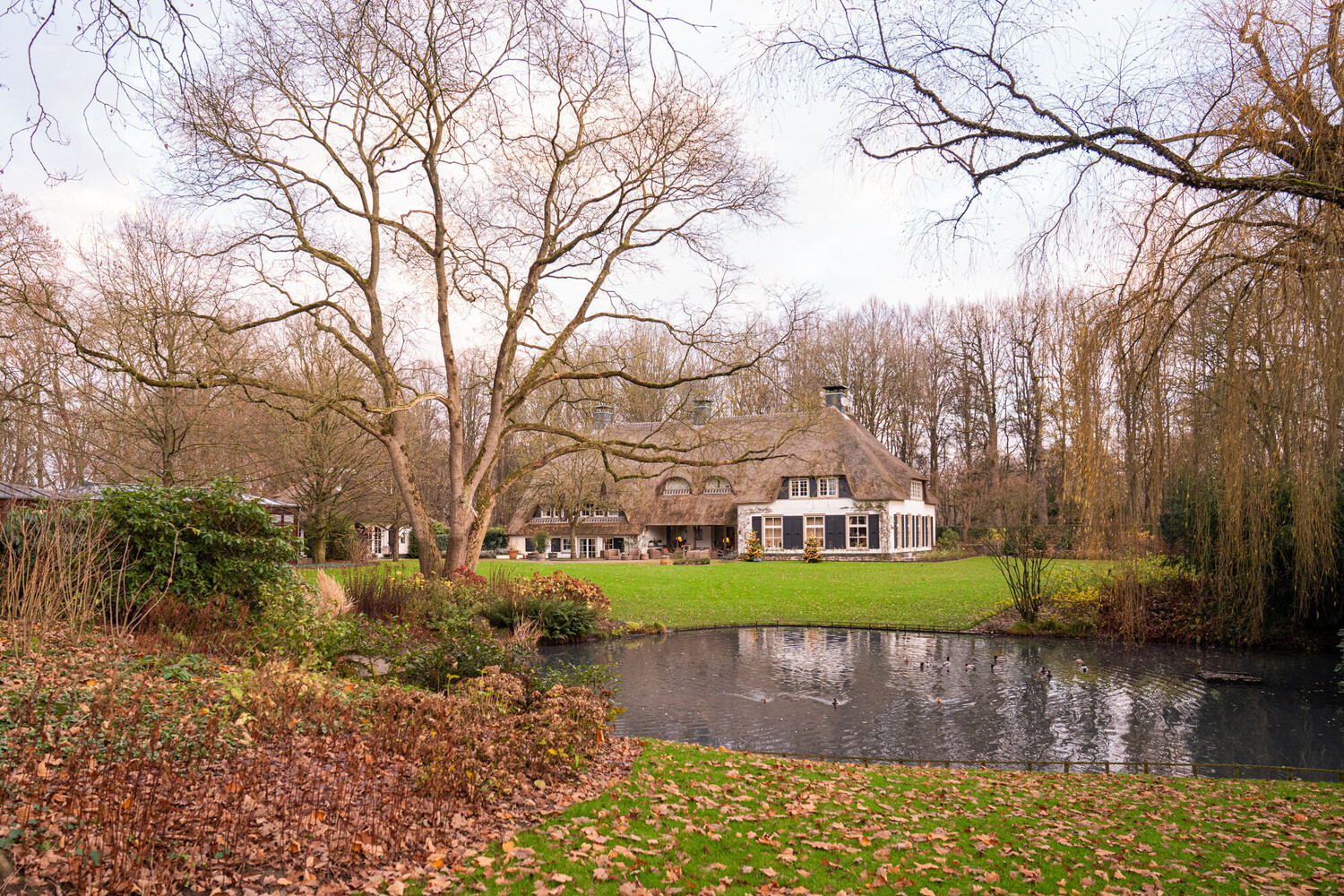
For a private estate, we carried out the planting of a large, semi-mature Taxodium distichum (swamp cypress) on a hard-to-reach site. The existing tree at this location had died, prompting a desire to restore this iconic spot with a comparable, robust specimen.
Challenges of the planting site
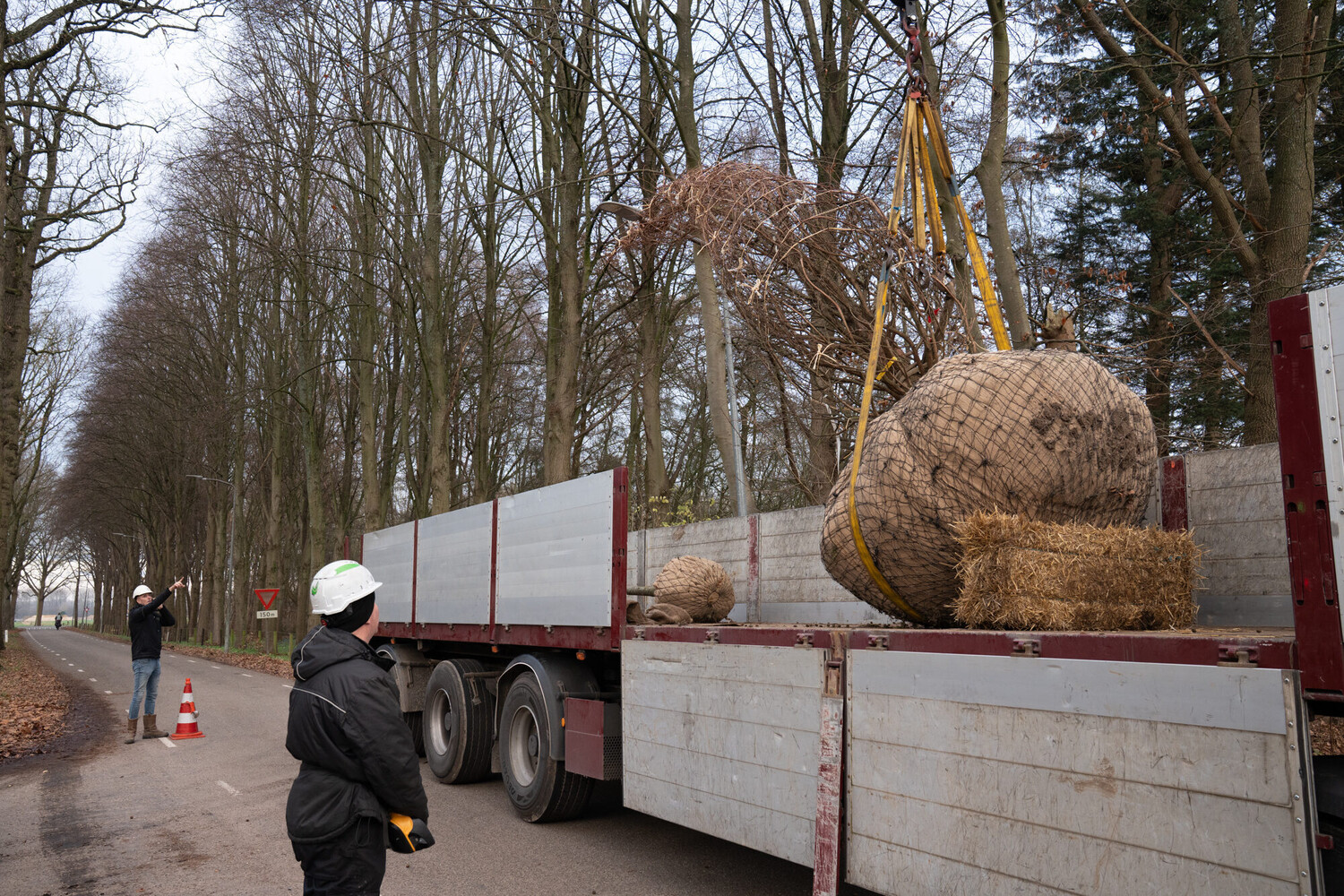
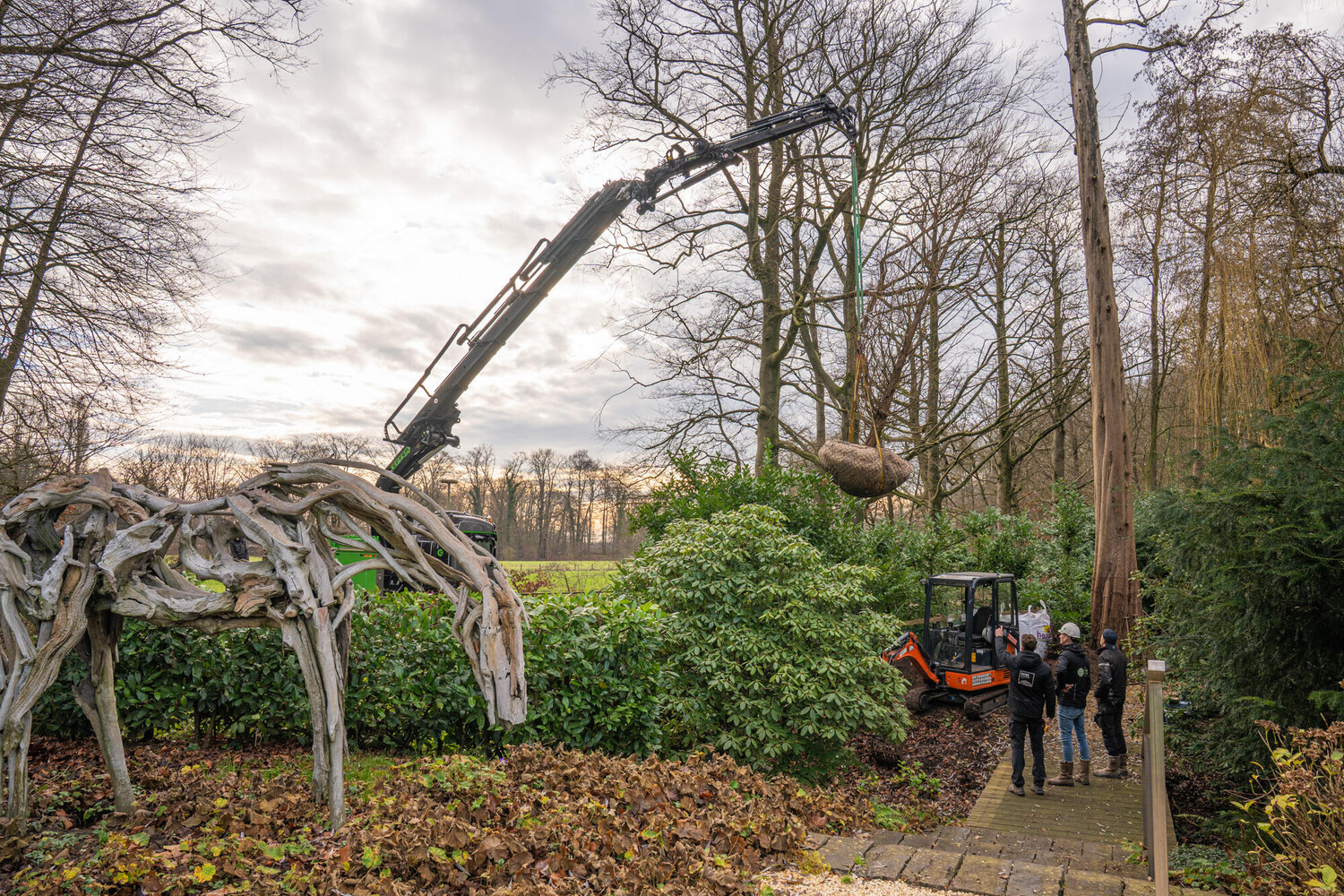
The project site (an island) presented significant logistical and technical constraints. For instance, the tree had to be hoisted over a fence, whilst the island itself was not directly accessible to heavy machinery. Furthermore, the space available for both the trailer and the crane setup was very limited, and the maneuvering space for the machinery was minimal, requiring a high degree of precision in the hoisting operation. The only area from which work could be carried out was a crucial access road that had to remain clear for emergency services. At the same time, it was essential to position the new tree precisely in relation to the existing landscape structure and the existing sightlines on the estate.
Preparation and planting
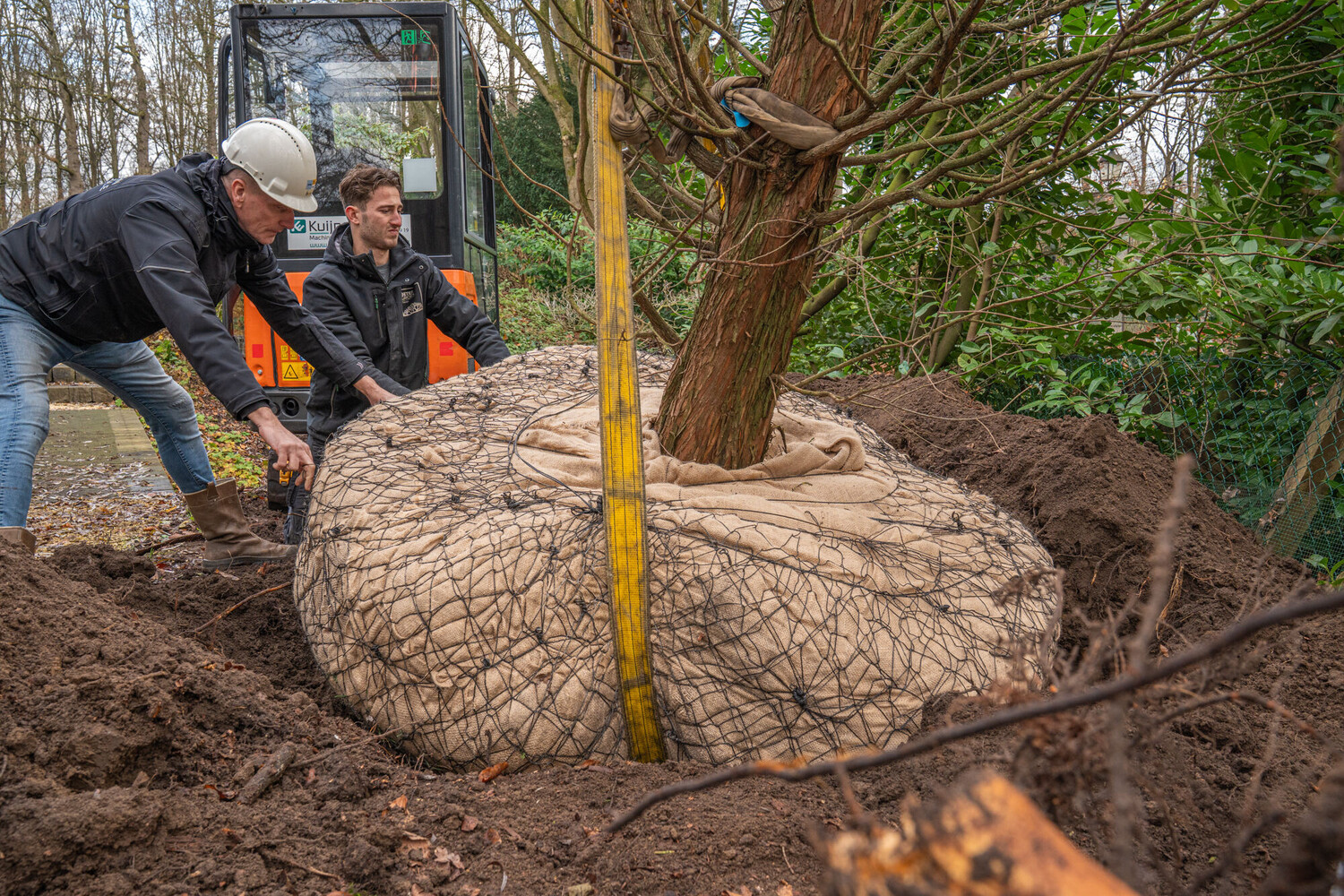
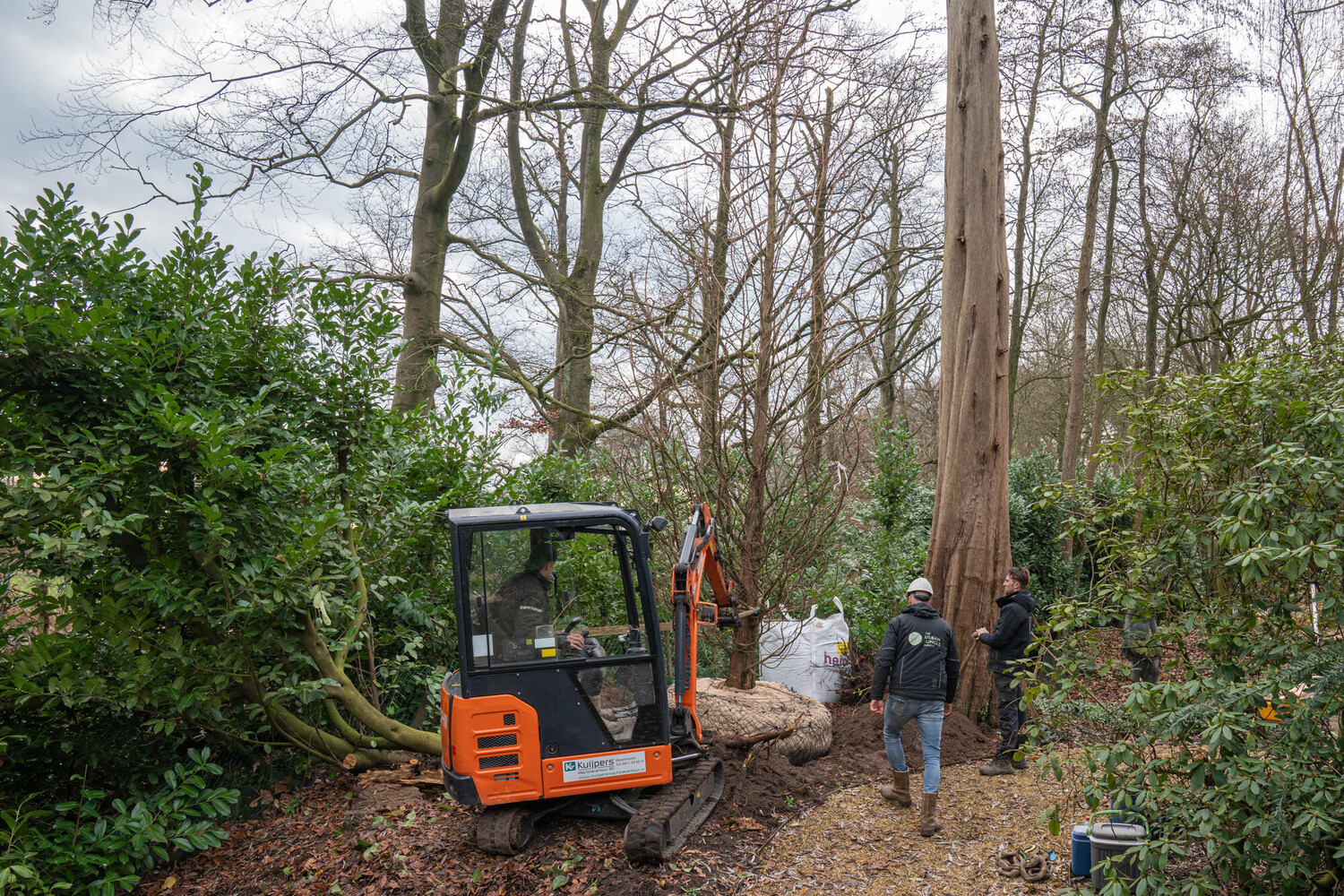
To ensure the work was carried out efficiently and in a controlled manner, the project was prepared in phases. A mini-excavator was hoisted into position on site in advance to create the planting hole. This hole was then dug to the exact dimensions required, fully tailored to the root ball size of the tree. To improve the soil structure, a big bag of tree-planting sand was added and carefully worked into the soil. Particular account was taken of the high water table, in line with the site requirements of the Taxodium distichum; it is not for nothing that its common name is ‘swamp cypress’.
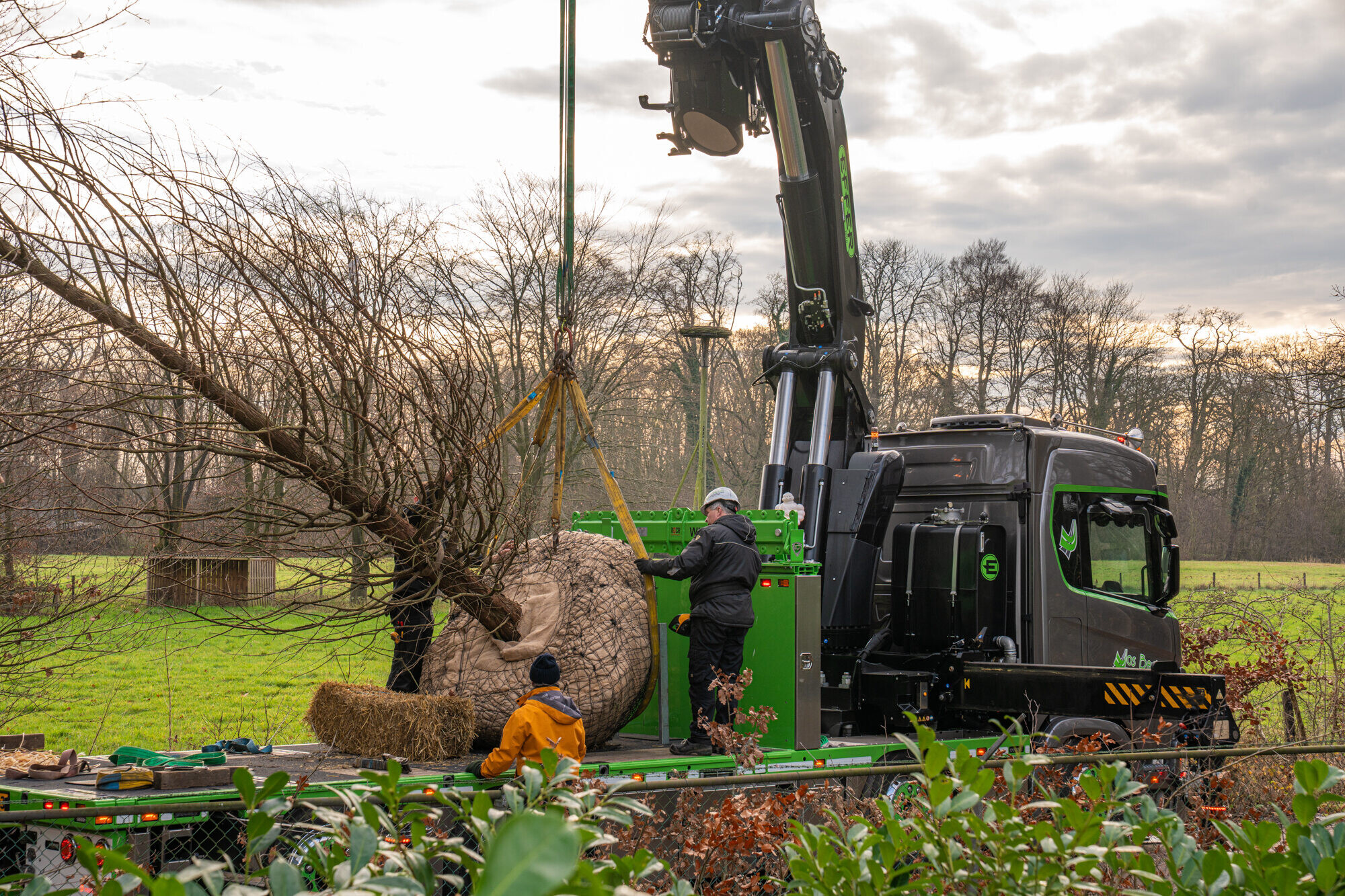
The planting took place under our full supervision, ensuring smooth coordination between transport, the crane operator and the gardener. The tree was transported by trailer to the furthest reachable position, after which it was hoisted over the fencing onto the island using a crane. Due to the limited space and the crane’s minimal turning radius, positioning required true precision work. The tree was then carefully placed in the planting hole, ensuring the correct planting depth and positioning. After planting, the root ball was anchored underground and the tree was thoroughly watered, ensuring optimal contact with the surrounding soil and minimizing settlement.
This replanting has restored the estate’s original avenue and visual structure. The new tree complements its predecessor both visually and ecologically and will grow into a substantial specimen over the coming years. Finally, the surrounding planting bed has been neatly finished and planted with shade-loving plants.