Houthavens Botanique: from derelict site to green meeting place
In the heart of Amsterdam's Houthavens district, a disused construction site has been transformed into Houthavens Botanique: a botanical pocket park where nature, community and climate resilience come together. Commissioned by Heren2 and designed by Erwin Stam Tuinstudio, Ebben Project Support delivered the park's complete construction. From soil improvement and water management to hard landscaping, tree planting and planting schemes, every element was delivered as one integrated project to create a sustainable and future-proof public space.
When property developer Heren2 decided to postpone construction on the site, the question arose of how the land could be given a meaningful temporary purpose. The original idea was modest: to plant a few trees and introduce more greenery into the neighbourhood. Landscape designer Erwin Stam, however, recognised the opportunity to create something far more ambitious. Inspired by pocket parks he had visited in the United States and Australia, he designed a green retreat where tranquillity and social interaction take precedence over movement.
"I envisioned a refined green space where people wouldn't simply pass through. Not somewhere for jogging or cycling as quickly as possible, but an outdoor environment where you naturally slow down, relax and connect with others."
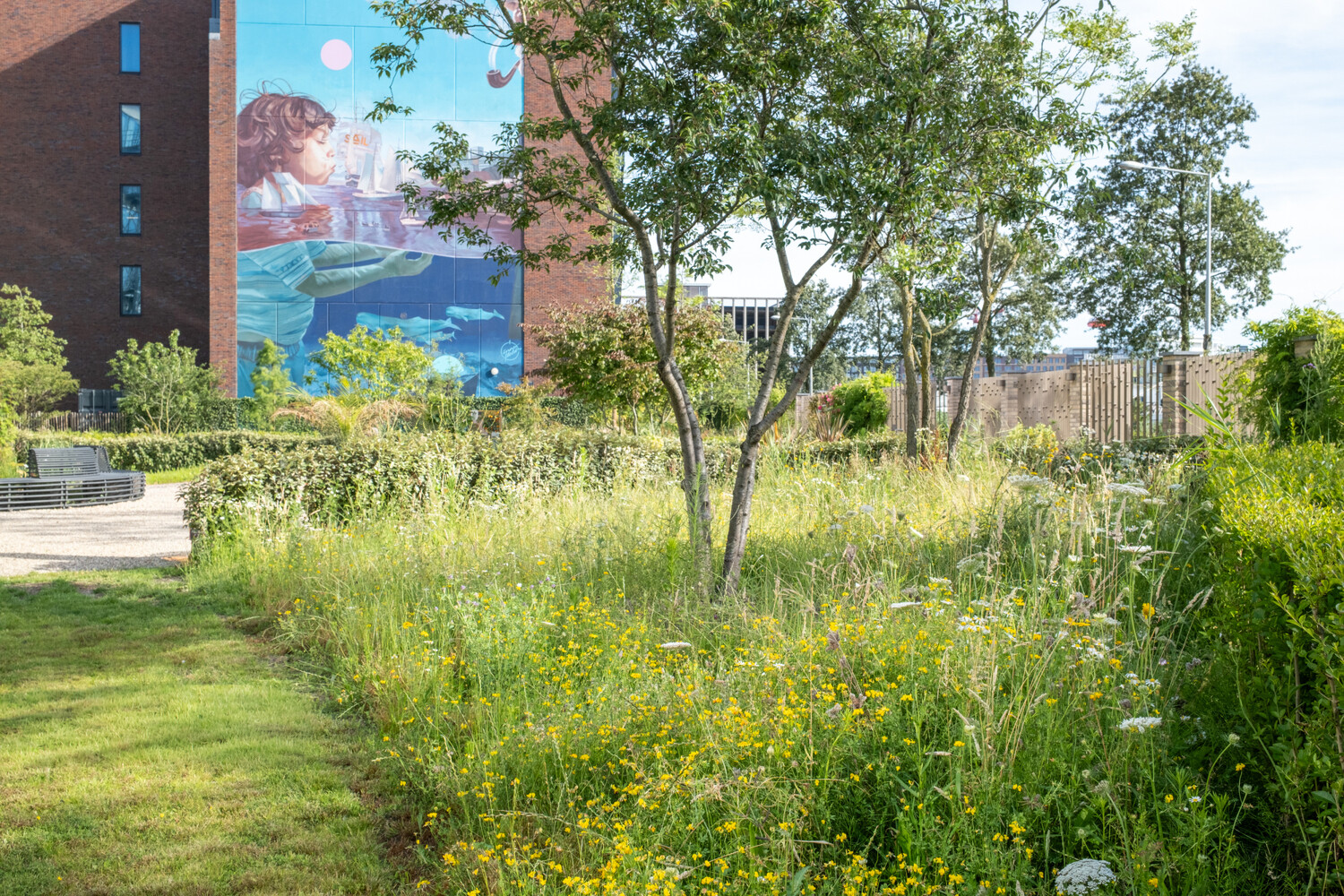
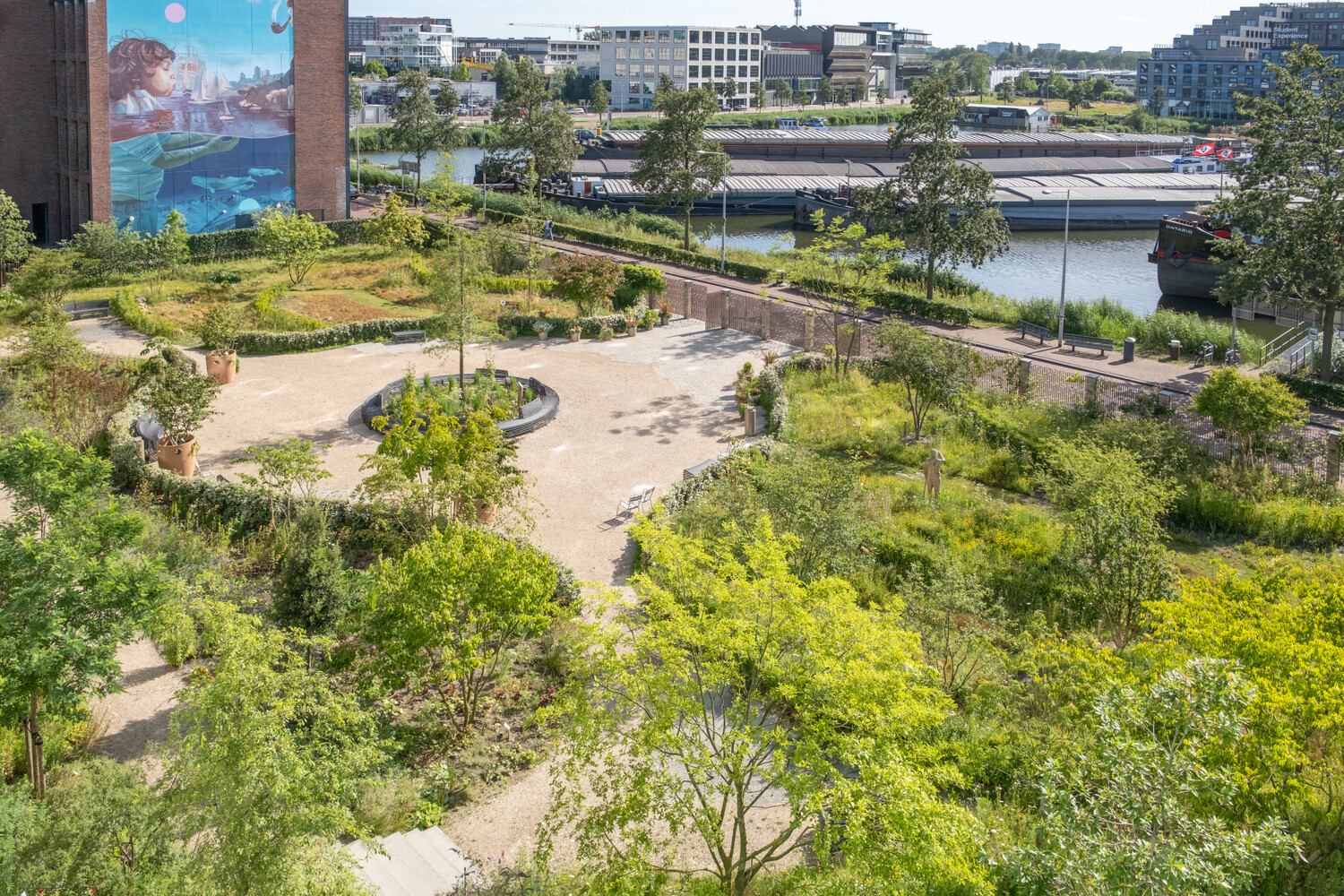
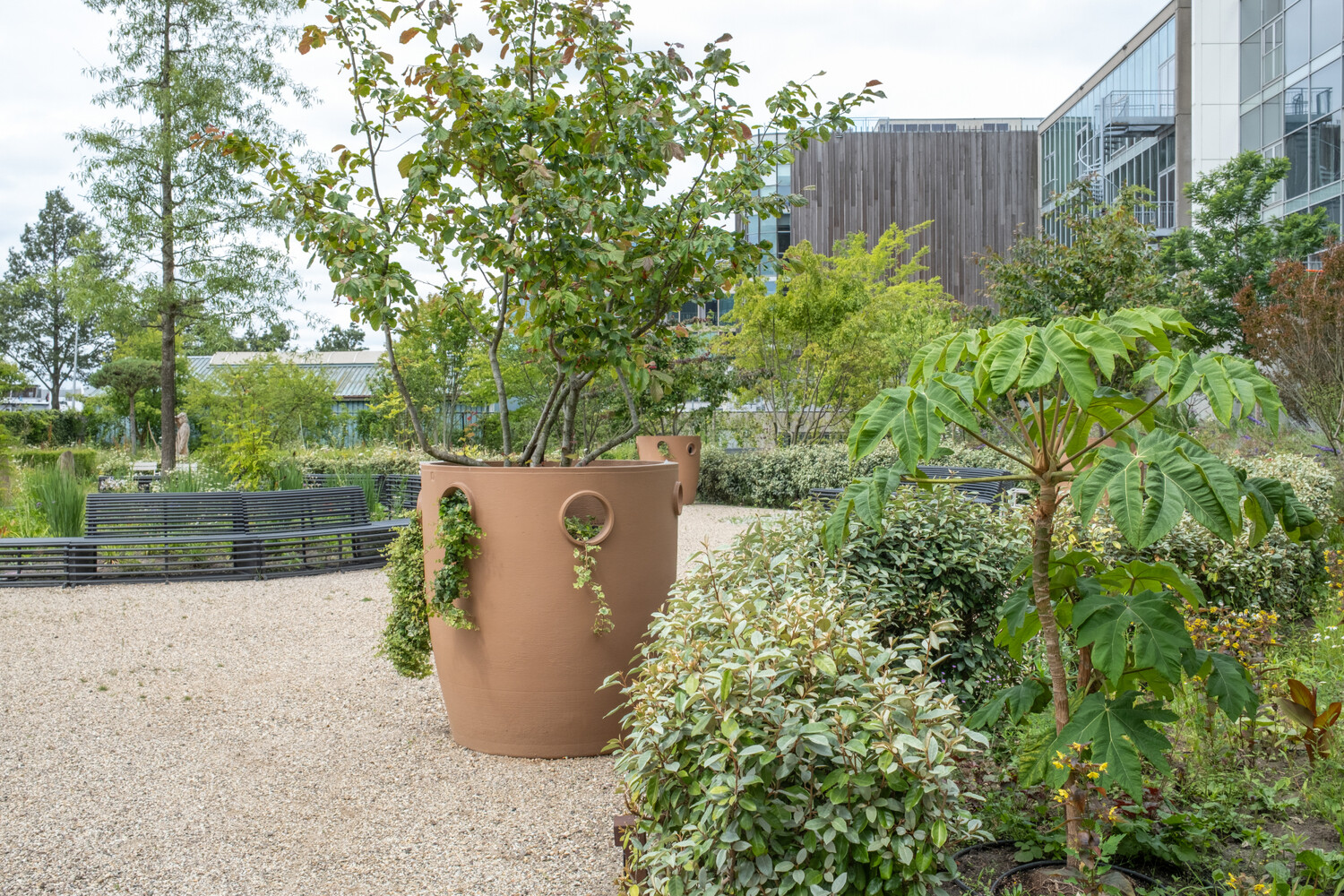
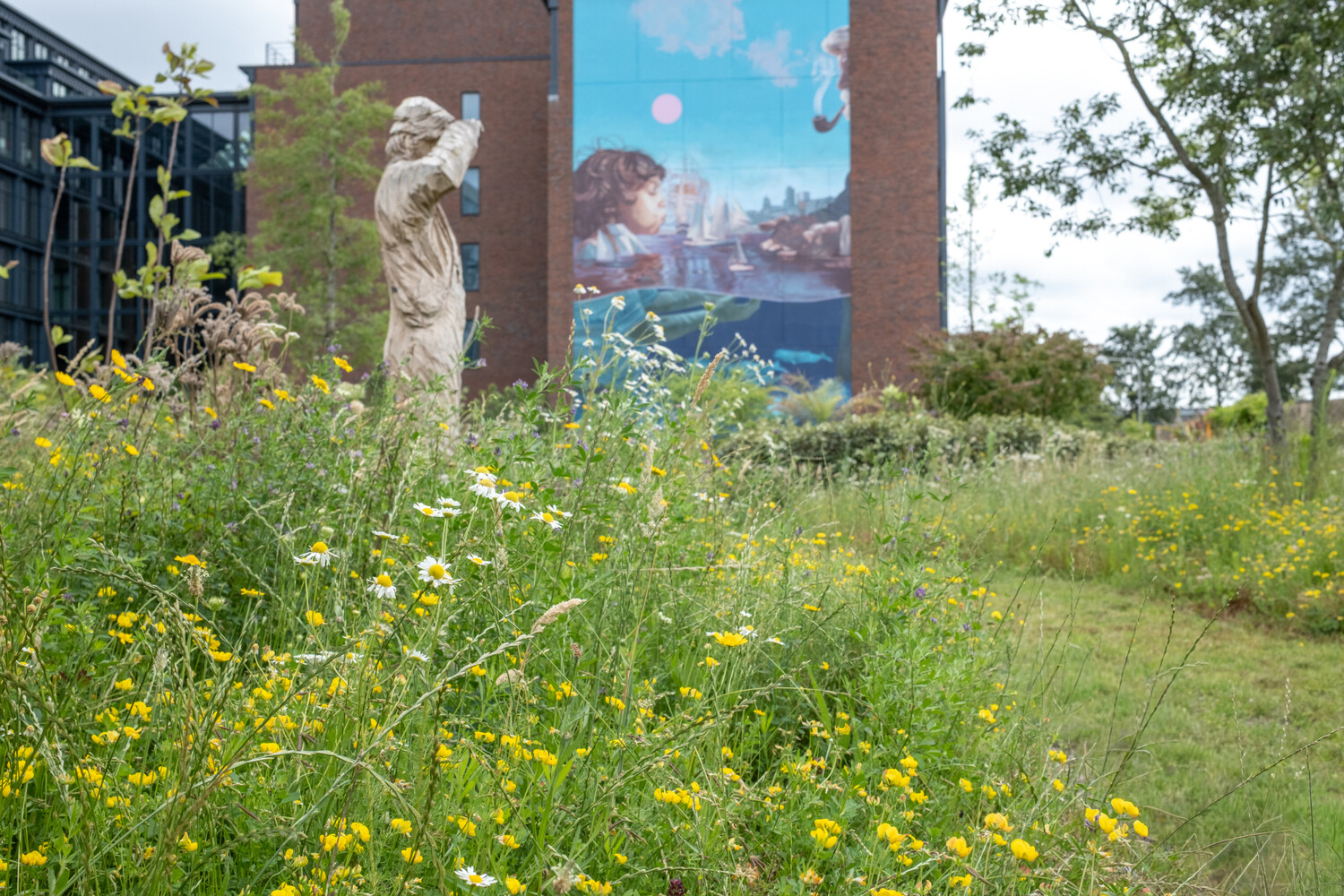
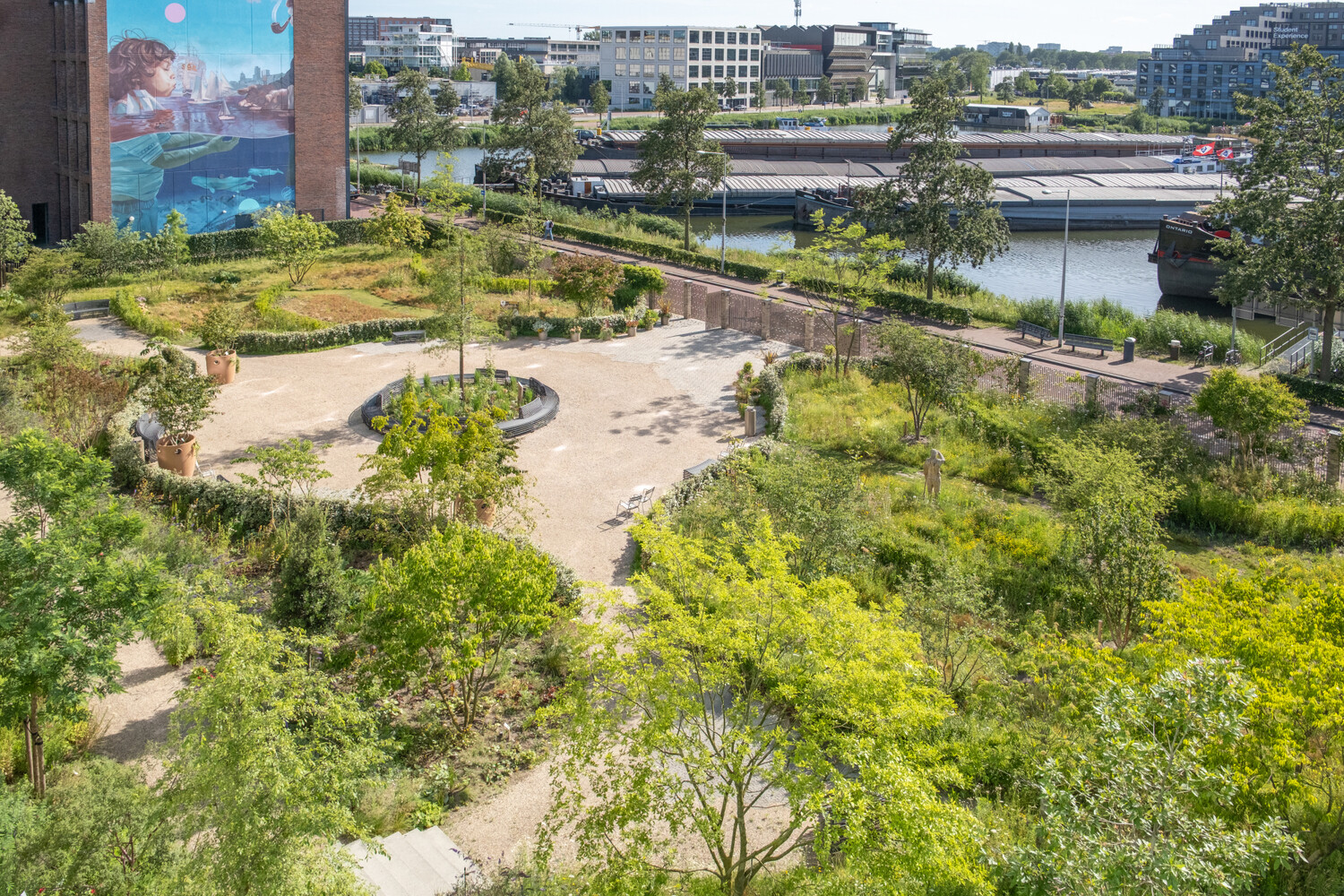
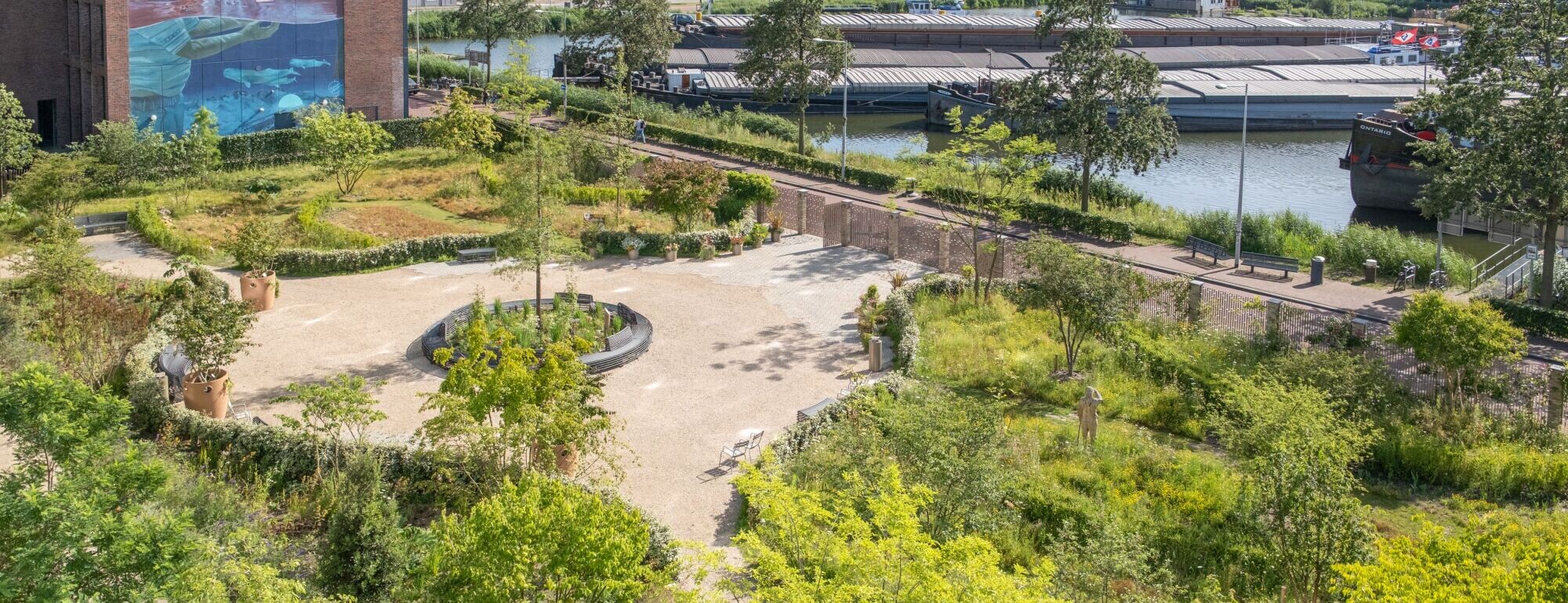
That vision is reflected throughout the park. Classical design lines, gently curving hedges and a circular plaza create an intimate atmosphere. A large mural and a timber sculpture give the site its own identity, while an elevated promenade lined with trees provides space for a wide range of activities, from neighbourhood gatherings to fashion shows and cultural events.
From Construction Ground to a Healthy Growing Environment
Beneath the lush appearance lies a carefully engineered foundation. The site consisted of heavily compacted clay and construction soils, preventing rainwater from infiltrating effectively. During the particularly wet winter of 2024–2025, creating a healthy soil profile proved to be the greatest challenge.
To establish suitable growing conditions for long-term planting, part of the existing soil was excavated and replaced. The remaining soil was improved to restore biological activity and strengthen its structure for the future. Wadis planted with moisture-loving species, including impressive Gunnera, temporarily store rainwater, while an underground drainage system removes excess water.
Ebben Project Support carried out the entire construction of the park. Working closely with Erwin Stam Tuinstudio and Ebben Nurseries, the design, soil improvement and construction were carefully coordinated. The result is a growing environment in which trees and plants can fully establish themselves. As root systems develop and soil life recovers, the soil's natural infiltration capacity continues to improve, creating a landscape that becomes increasingly resilient over time.
Trees prepared for tomorrow’s climate
The tree selection was carefully tailored to a changing climate. Species were chosen for their ability to withstand prolonged drought as well as periods of heavy rainfall, while also enhancing biodiversity and spatial quality. One particularly notable species is the willow oak (Quercus phellos), increasingly recognised as one of the most promising trees for future urban environments. Thanks to its remarkable adaptability, it thrives under city conditions. To mark the symbolic beginning of the park, children from BSO Houthaven planted an eight-metre specimen together with several shrubs during the annual Tree Festival. For the drier areas of the park, Pinus pinea was selected. With its distinctive umbrella-shaped crown, this Mediterranean pine not only creates a striking visual feature but also demonstrates how species from warmer climate zones are becoming increasingly relevant in climate-resilient urban landscapes.
Diversity as a guiding principle
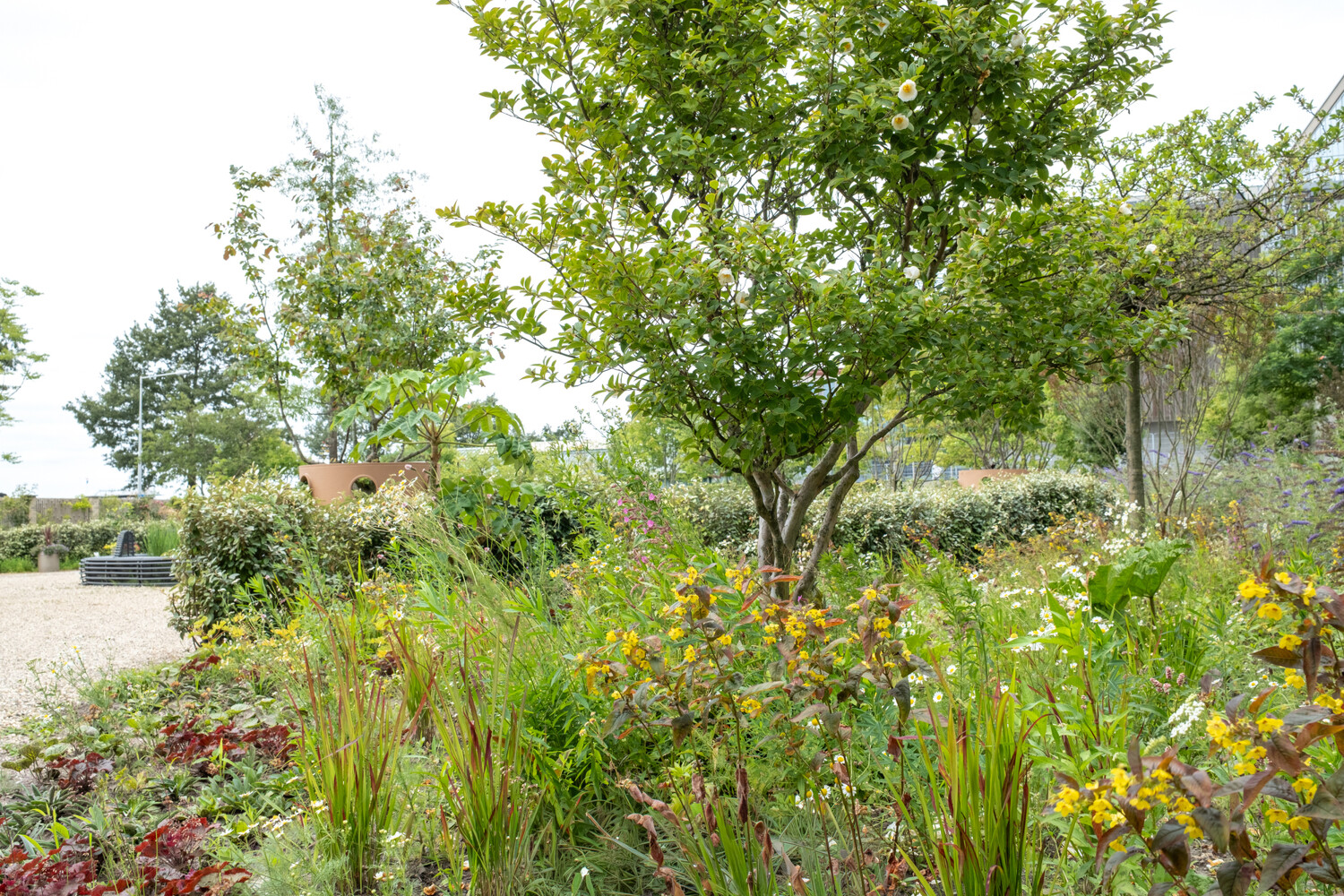
Alongside these signature trees, a diverse range of climate-resilient species was incorporated, each contributing to the character of the park. Parrotia persica provides spectacular autumn colour, while Gleditsia triacanthos, with its open canopy, allows light to penetrate the planting and serves as an important nectar source for insects. Zelkova serrata, Quercus ilex and several elm cultivars were also selected for their proven performance in urban growing conditions and their resilience to drought, heat and other climate extremes. The landscape architects at Ebben Nurseries were closely involved in selecting the trees and advising on the design of the growing environments, continuing a collaboration that has existed for many years.
A designed landscape with space for spontaneous nature
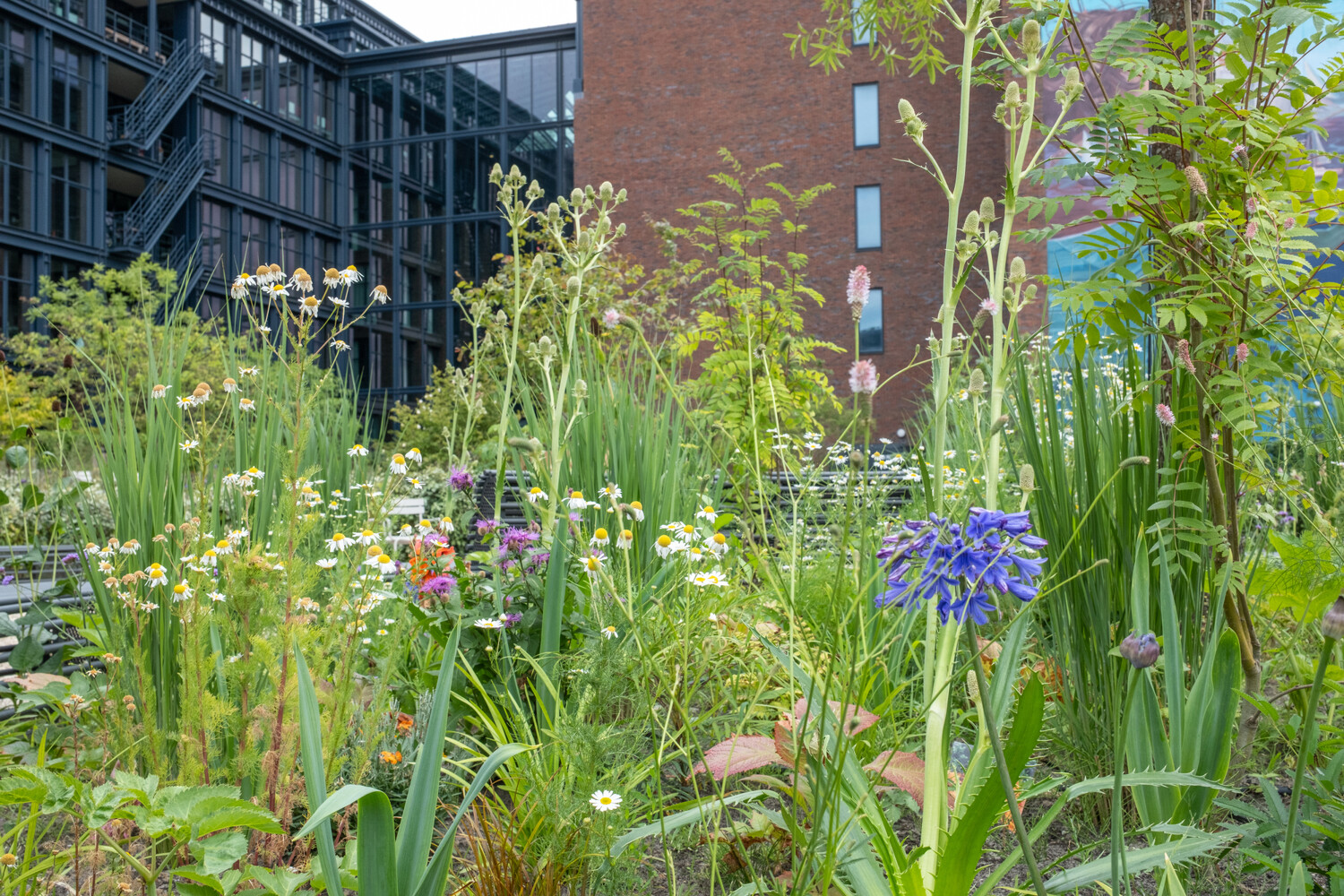
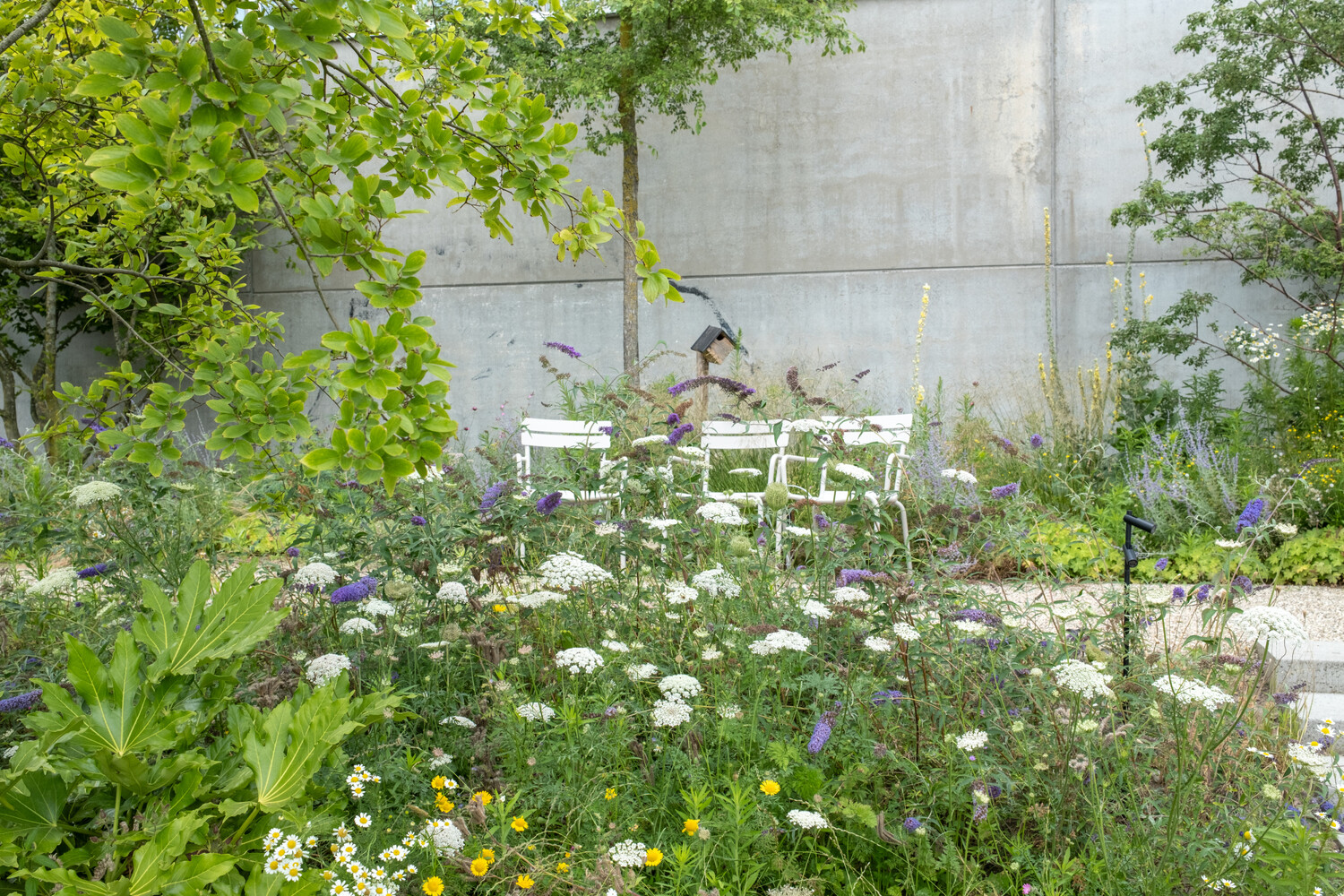
Although Houthavens Botanique has been carefully designed, nature has deliberately been given the freedom to evolve. The trees provide the park's structure, while the understorey planting has been composed to encourage spontaneous vegetation. A wildflower mix provides colour throughout the seasons and an abundant food source for pollinating insects. Special roses, hydrangeas and a wide range of bulbs and tubers have also been planted. One particularly distinctive feature is the inclusion of more than 4,000 botanical tulips. Unlike many modern cultivars, these natural tulip species persist for many years and are capable of naturalising by self-seeding. According to Erwin Stam, this carefully managed spontaneity lies at the heart of the design. "The ambition isn't to control every detail, but to allow the park to develop partly on its own. It should be free to find its own balance, without becoming neglected."
Supporting Biodiversity
Plants often regarded as weeds also play an important ecological role within the park. Thistles act as host plants for the Painted Lady butterfly and numerous specialist insects. Cleavers support species such as the bedstraw hawk-moth, while St John's wort is essential for the rare St John's Wort moth. Great mullein provides food for specialist leaf beetles, and yarrow attracts a wide variety of hoverflies, solitary bees and parasitic wasps. By deliberately incorporating these species into the planting design, the park has developed into a rich ecological system where biodiversity is not merely accommodated but actively encouraged to flourish.
Green Space as a Place for Community
Since its official opening by Her Royal Highness Princess Margarita de Bourbon de Parme, Houthavens Botanique has become a vibrant meeting place for the local community. The park hosts neighbourhood events, business lunches, live music performances and educational activities. Erwin Stam has also organised workshops in which children were invited to design their own dream park.
Houthavens Botanique demonstrates how a temporary site can evolve into a place of lasting significance. Thanks to the close collaboration between the client, designer, contractor and green specialists, the project has created a park where climate resilience, biodiversity and social connection reinforce one another. The construction carried out by Ebben Project Support provides the foundation for a green public space that will continue to develop and mature for years to come.
Photography: Maayke de Ridder
Back to project overview